
Teaching Persistence as a Process: Helping Kids Learn How to Keep Going
Nature Sprouts Adventure Club | Outdoor Learning, Grit, & Growth
At Nature Sprouts Adventure Club, we believe persistence isn’t something kids either have or don’t have. It’s something they practice, experience, and grow into—especially when they’re given the time, space, and freedom to explore the world through play.
In a world that increasingly rewards quick answers, instant success, and measurable outcomes, many children are quietly learning that struggle means failure. But what if we flipped that narrative early?
What if we taught children that persistence is a process—one rooted in curiosity, flexibility, and learning—rather than a test of toughness or perfection?
When we do, something powerful happens:
✨ “This is too hard” becomes “I wonder what I could try next?”
Why Persistence Matters More Than Ever
Research consistently shows that persistence, grit, and adaptive problem-solving are stronger predictors of long-term success than early academic performance alone. According to psychologist Angela Duckworth, persistence paired with purpose helps children thrive through challenge—not avoid it.
Young children are actually born persistent. Watch a toddler learn to walk, climb, stack, or pour. They fall. They try again. They adjust. They keep going.
So what changes?
Often, it’s the environments we place them in—ones that prioritize outcomes over exploration, right answers over questions, and speed over process.
At Nature Sprouts, we work intentionally to protect and strengthen children’s natural persistence through outdoor, play-based learning.
Reframing Persistence: From Trait to Process
Instead of treating persistence as a fixed personality trait (“She’s a quitter” or “He’s so determined”), we can teach children that persistence is a cycle they move through again and again:
1. Setting a Goal (Big or Small)
Children set goals constantly—sometimes without realizing it.
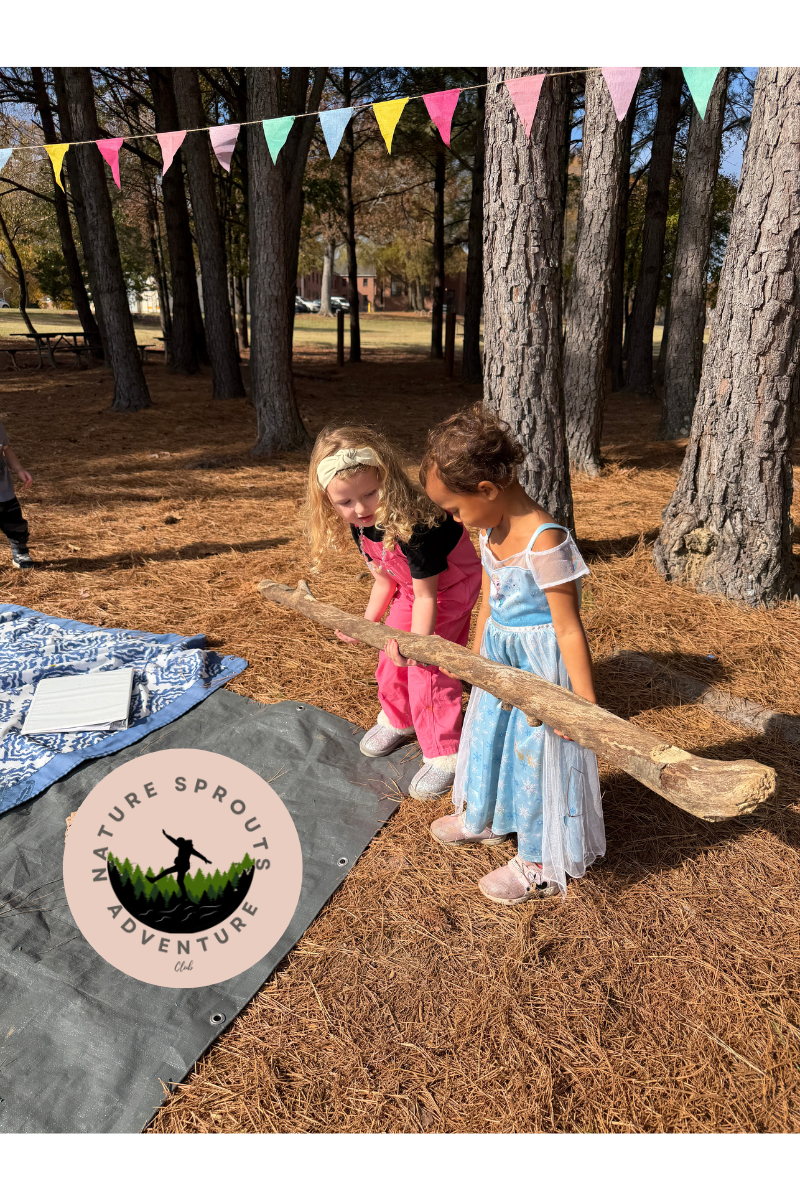
“I want to climb that log.”
“I want to build a shelter.”
“I want to carry all these sticks.”
When goals are self-chosen and rooted in curiosity, kids are far more motivated to stick with them. Outdoor environments naturally spark this kind of intrinsic motivation.
Nature Tip:
Let children define their own goals during play. Resist the urge to improve or redirect them.
2. Meeting Challenges
Challenges are not interruptions to learning—they are the learning.
Uneven ground, heavy branches, weather changes, group dynamics, and unexpected outcomes all provide real-world obstacles that require kids to pause, assess, and respond.
Research published in Frontiers in Psychology (2018) shows that children who engage in risky outdoor play develop stronger resilience, emotional regulation, and problem-solving skills.
At Nature Sprouts, we welcome challenge as a teacher.
3. Choosing How to Respond
When children hit a roadblock, they have two powerful options:
Apply effort – keep going, try harder, stay with it
Adapt – change the approach, ask for help, try something new
True persistence lives in the balance between the two.
Endless effort without flexibility leads to frustration.
Flexibility without effort leads to avoidance.
Outdoor play supports both—especially when adults model calm curiosity instead of urgency.
4. Focusing on Learning, Not Just Outcomes
Did the tower fall?
Did the path flood?
Did the plan change?
Great. There’s learning there.
Shifting the focus from “Did it work?” to “What did we learn?” reduces fear of failure and keeps kids engaged longer.
According to a study in Child Development (2016), children praised for effort and strategy—rather than results—show higher persistence and adaptability when tasks become difficult.
How We Support Persistence at Nature Sprouts Adventure Club
Persistence is woven into everything we do—without pressure, prizes, or perfection.
🌿 Child-Led Outdoor Play
Loose parts, natural materials, and open-ended invitations encourage experimentation and revision.
🌿 Gentle Adult Support
We step back, observe, and offer language that supports thinking:
“What are you noticing?”
“Do you want to try that again or try something different?”
“That didn’t work the way you expected—interesting!”
🌿 Playfulness as a Tool
Humor, silliness, and imagination keep children open to new ideas. Neuroscience tells us that play activates creative problem-solving and reduces stress responses in the brain.
Practical Ways to Teach Persistence at Home or School
You don’t need special materials—just a mindset shift.
✔ Frame Goals Around Learning
“I can’t wait to see what you discover while you try.”
✔ Normalize Struggle
“That part is tricky. Tricky things help our brains grow.”
✔ Offer Choice in Response
“Do you want to keep going, or change your plan?”
✔ Reflect Together
After play, ask:
“What worked?”
“What surprised you?”
“What might you try next time?”
Even toddlers benefit from this reflective language.
The Long-Term Gift of Persistence
When children learn that:
challenges are expected
effort and flexibility work together
learning matters more than perfection
They develop confidence that lasts far beyond childhood.
At Nature Sprouts Adventure Club, we’re not raising kids who never struggle—we’re nurturing kids who know how to keep going, with curiosity, kindness, and trust in themselves.
🌱 Those are persistence roots worth growing.
Want to Learn With Us?
Join us for weekly outdoor classes, seasonal sessions, and community play experiences designed to support persistence, empathy, and joyful learning—naturally.