
How to Beat the Summer Heat with Little Explorers in North Carolina
Your guide to safe outdoor adventures during North Carolina's hottest months.
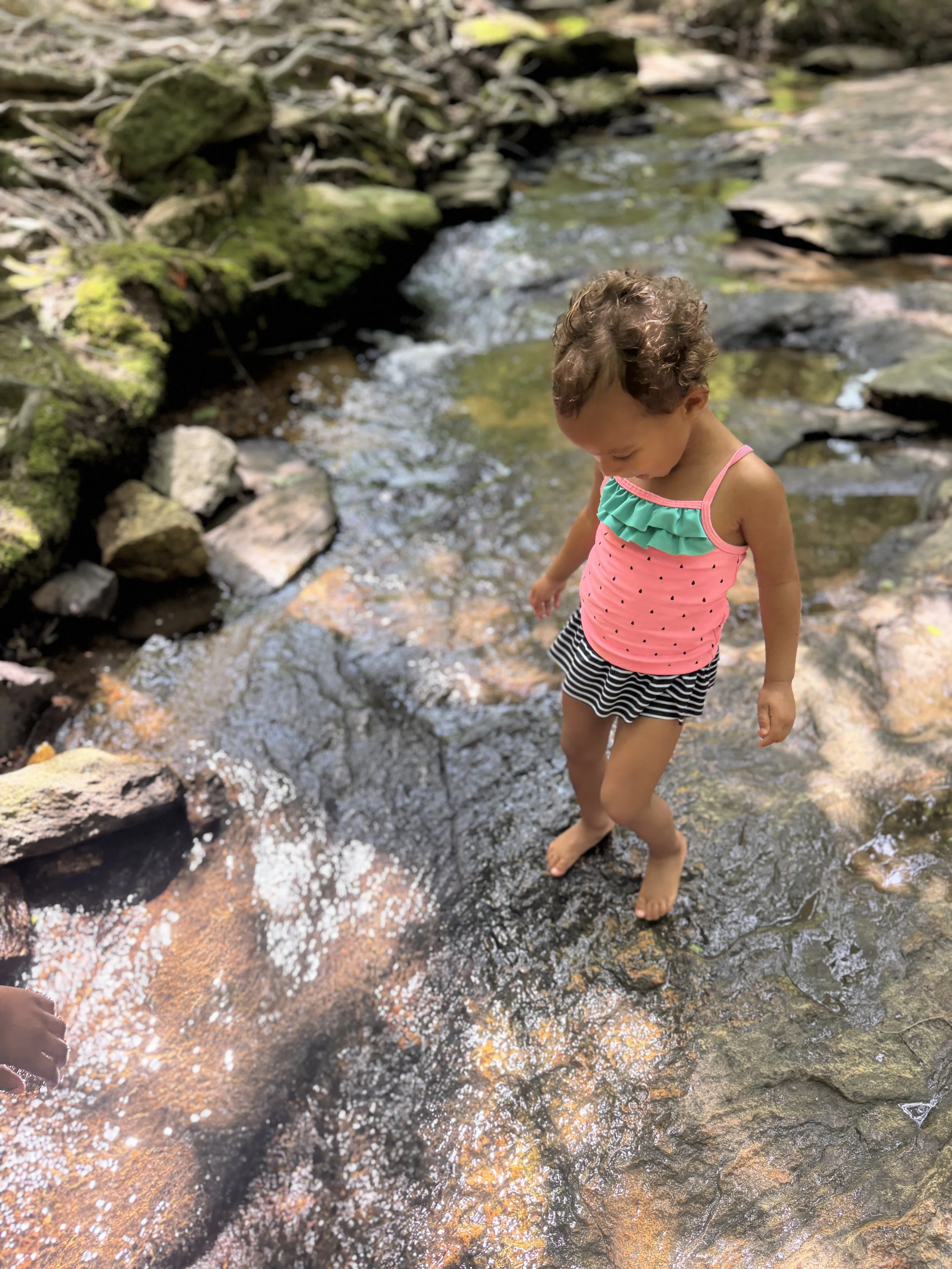
Summer in North Carolina is magical. The gardens are overflowing, butterflies are dancing through the flowers, creeks are calling our names, and there seems to be adventure waiting around every corner. But let's be honest. North Carolina summers can also be HOT.
Really hot.
In recent years we've seen multiple stretches of 90°+ temperatures and heat indexes soaring into the triple digits. As parents and caregivers, it can feel intimidating trying to balance outdoor play with keeping our little explorers safe. The good news? With a little preparation and some simple adjustments, families can continue enjoying nature all summer long.
At Nature Sprouts Adventure Club, we believe outdoor play shouldn't stop just because the temperatures rise. Instead, we teach children how to understand nature, respect the weather, and safely adapt their adventures.
Understanding Heat Index: Why the "Feels Like" Temperature Matters
When checking the weather forecast, many families look only at the actual temperature.
However, the number that matters most during summer is often the Heat Index.
The Heat Index combines air temperature and humidity to determine what the temperature actually feels like to your body.
For example:
92°F with low humidity may feel manageable.
92°F with high humidity may feel closer to 105°F.
Because North Carolina summers are often humid, the Heat Index can climb much higher than the thermometer suggests.
Understanding Heat Risk Colors
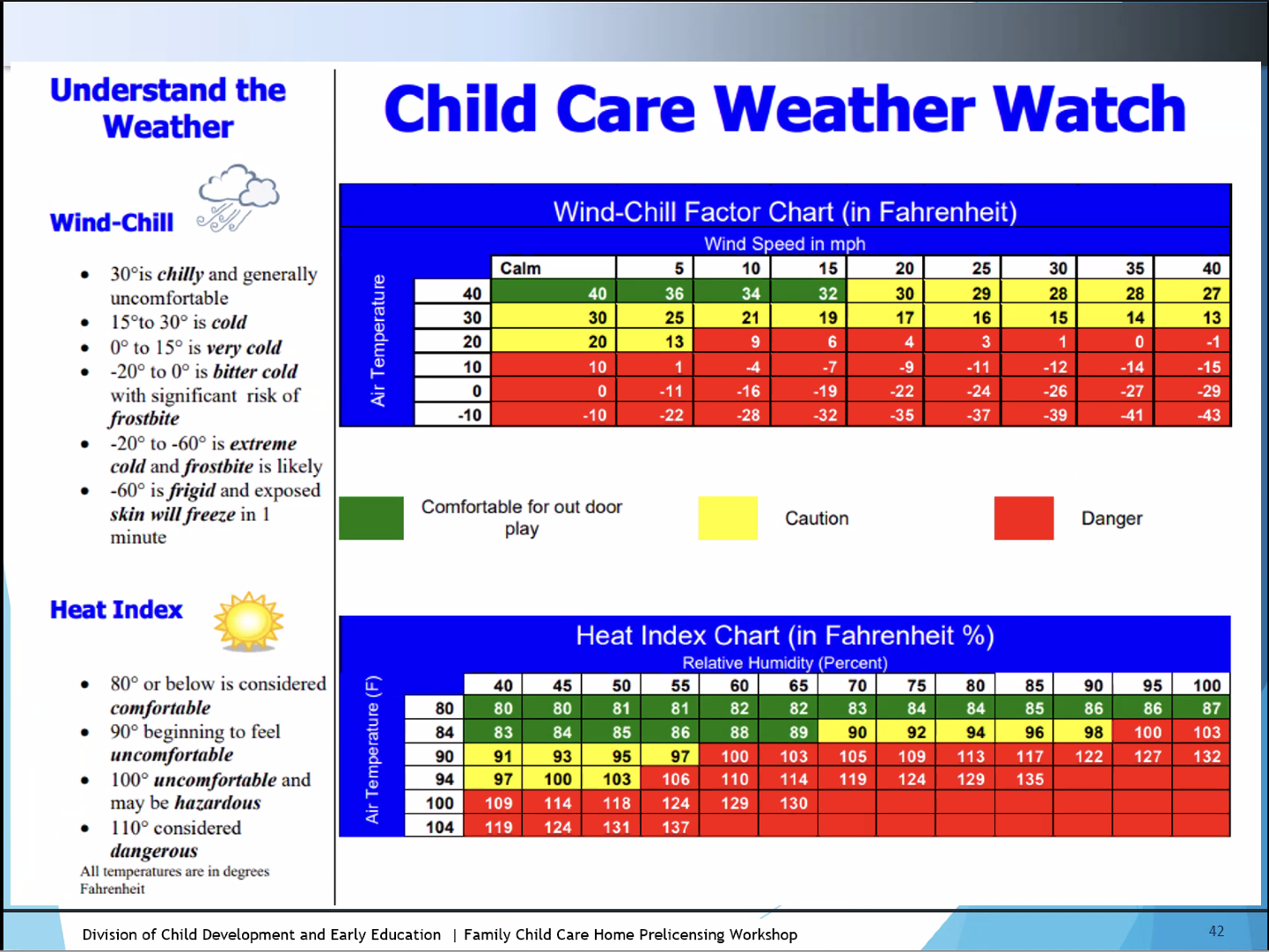
The weather chart we use at NSAC to determine safety of outdoor play.
Many weather and public health agencies use color-coded systems to communicate heat risk like the chart above. Get a copy of this Warm Weather Guide to print and post at home.
Green – Low Risk
Outdoor play is generally safe.
Continue normal hydration.
Yellow – Moderate Risk
Take more frequent water breaks.
Seek shade often.
Reduce strenuous activity.
Orange – High Risk
Limit outdoor activity.
Increase hydration.
Watch children closely for signs of overheating.
Red – Very High Risk
Avoid prolonged outdoor activity.
Move activities indoors or into water-based environments.
Purple – Extreme Risk
Outdoor play is not recommended.
Heat-related illnesses can occur quickly.
Learning to read local heat advisories helps families make informed decisions before heading outside.
Signs Your Child May Be Overheating
Young children often become immersed in play and may not recognize when their bodies need a break.
Watch for:
Flushed cheeks
Excessive sweating
Complaints of dizziness
Fatigue
Headaches
Irritability
Nausea
Lack of sweating despite heat
If you notice these signs:
Move to shade immediately.
Offer cool water.
Remove excess layers.
Use cool cloths on the neck and wrists.
Seek medical attention if symptoms worsen.
The Secret to Summer Outdoor Play: Timing Matters
One of the easiest ways to beat the heat is simply choosing the right time of day.
Best Times to Play Outdoors
Early Morning
Sunrise through approximately 10:00 AM
Cooler temperatures
Lower UV exposure
Active wildlife sightings
Evening
Approximately 6:00 PM until sunset
Reduced sun intensity
Cooler playground equipment
Beautiful golden-hour lighting
Times to Avoid
The hottest and most intense period is typically:
11:00 AM – 4:00 PM
This is when UV radiation and temperatures are often at their highest.
Instead of avoiding nature altogether, shift your adventures earlier or later.
Why Shade Is Nature's Air Conditioner
One of our favorite summer strategies is simple:
Follow the trees.
Research shows that shaded areas can feel dramatically cooler than surrounding sunny spaces. Tree shade can lower perceived temperatures by approximately 10–20°F, while shaded surfaces may be 20–45°F cooler than those exposed to direct sunlight.
That means a park that feels unbearable in full sun may feel comfortable under a mature tree canopy.
This is one reason you'll often find Nature Sprouts adventures in forests, wooded trails, and shady parks during the summer months.
Water Play Makes Everything Better
If you're heading outdoors during summer, add water whenever possible.
Simple ideas include:
Spray bottles
Water painting sidewalks
Splash pads
Creek exploration
Water tables
Bucket-and-cup stations
Sponge toss games
Nature washing stations
Water play not only keeps children cool but also provides sensory experiences, scientific exploration opportunities, and endless imaginative play.
Our Favorite Cool Places to Explore Around the Triangle
William B. Umstead State Park
Miles of shaded trails beneath mature hardwood forests.
Perfect for:
Family hikes
Nature observation
Cooler summer walks
Lake Crabtree County Park
Offers wooded trails, lake views, and plenty of shaded areas for exploration.
Perfect for:
Nature walks
Picnic adventures
Bird watching
Eno River State Park
One of the best creek-play destinations in the Triangle.
Perfect for:
Water exploration
Rock hopping
Cooling off naturally
Sandy Creek Park
A hidden gem featuring shaded trails and creek access.
Perfect for:
Nature scavenger hunts
Forest play
Summer exploration
North Carolina Museum of Art Park
Wide open spaces combined with wooded sections and beautiful walking trails.
Perfect for:
Nature-inspired art
Family walks
Outdoor exploration
Durant Nature Preserve
Dense forest canopy creates a noticeably cooler environment than many neighborhood parks.
Perfect for:
Nature study
Hiking
Wildlife observation
Summer Outdoor Essentials Checklist
Before leaving home, pack:
✓ Water bottles for everyone
✓ Electrolyte drinks on extremely hot days
✓ Hats
✓ Lightweight clothing
✓ Sunscreen
✓ Snacks
✓ Small towel
✓ Change of clothes
✓ Bug spray
✓ First aid kit
✓ Water play supplies
A little preparation goes a long way toward creating a safe and enjoyable adventure.
Nature Doesn't Stop in Summer—We Just Adapt
One of the greatest gifts we can give children is teaching them how to work with nature rather than against it.
Summer offers opportunities to learn about weather, hydration, shade, ecosystems, and seasonal changes.
By choosing the right times of day, seeking shade, incorporating water play, and understanding heat safety, families can continue building meaningful outdoor memories all season long.
Join Us for a Weekly Adventure
Looking for outdoor fun without all the planning?
Join us at one of our weekly Nature Sprouts Adventure Club playdates!
Each week we explore a different park around the Triangle, discover new natural spaces, enjoy story time, meet other nature-loving families, and let children experience the joy of unstructured outdoor play.
We do the scouting so you can focus on making memories.
Come explore, play, and grow with us this summer.
Because childhood was meant to be lived outdoors—even when it's hot.