
Winter Sowing with Milk Jugs: The Easiest, Cheapest Way to Start Seeds at Home
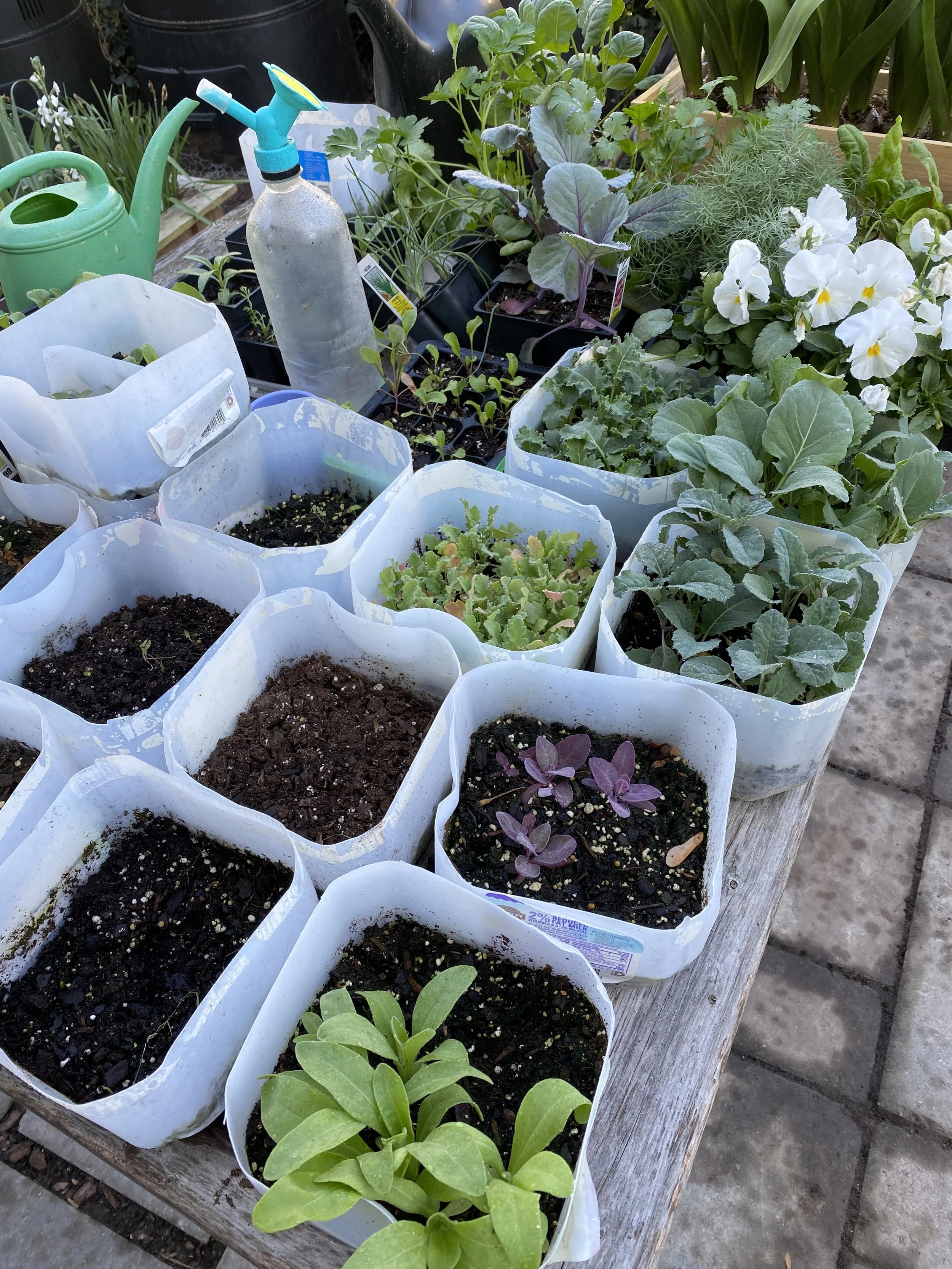
If you’ve ever felt overwhelmed by indoor seed starting—grow lights, heat mats, constant monitoring—winter sowing might just change your gardening life. After using this method for the past four years here at My Carolina Homestead, I can confidently say that winter sowing with gallon milk jugs is one of the simplest, most forgiving, and most eco-friendly ways to grow high-quality plants at home.
It’s truly a set it and mostly forget it approach that works with nature instead of against it, and it consistently produces strong, resilient seedlings ready to thrive in the garden.
What Is Winter Sowing?
Winter sowing is a seed-starting method where seeds are sown outdoors in enclosed containers—most commonly recycled gallon milk jugs—during the winter months. These containers act as mini greenhouses, protecting seeds from extreme conditions while still exposing them to natural temperature fluctuations, rainfall, sunlight, and seasonal cues.
Instead of us trying to perfectly time germination indoors, the seeds decide when they’re ready.
Why Winter Sowing Works So Well
🌱 Seeds Germinate When Conditions Are Right
Each plant species has its own environmental preferences—temperature, moisture, light exposure. Winter sowing allows seeds to respond naturally to these cues. When the timing is right, they sprout. No guesswork required.
🌞 Mini Greenhouses = Stronger Plants
Milk jugs trap warmth and moisture while still allowing airflow and exposure to outdoor conditions. This results in stocky, hardy seedlings that don’t need “hardening off” like indoor-started plants.
💸 High-Quality Plants for Cheap
With winter sowing, you can grow dozens (or hundreds) of plants for the cost of seeds and recycled containers. No grow lights. No heating equipment. No fancy trays.
🌎 Eco-Friendly & Low-Waste
There are many ways to winter sow—plastic bins, takeout containers, trays—but the traditional milk jug method remains one of the most sustainable options. It repurposes materials that would otherwise be discarded and keeps seed starting simple and accessible.
Honoring the Roots of Winter Sowing
The winter sowing method was popularized by Trudi Greissle Davidoff, who developed and shared this approach in the late 1990s. Her work made seed starting more inclusive, affordable, and achievable for everyday gardeners—and many of us are still benefiting from her wisdom decades later.
How Milk Jugs Work as Mini Greenhouses
Each jug is cut open (leaving a hinge), filled with drainage holes, and topped with the cap removed. This design allows:
Rain and snow to enter naturally
Excess moisture to drain out
Air circulation to prevent mold
Sunlight to warm the soil during the day
Inside, the soil stays consistently moist and protected, while temperature fluctuations help signal when it’s time for seeds to grow.
Tips I’ve Learned After 4 Years of Winter Sowing
Here’s what experience has taught me:
💧 Don’t Forget to Check Moisture
Even though winter sowing is low-maintenance, extended dry spells or very low humidity can dry containers out. If there’s no rain or snow for a while, give your jugs a good watering.
🌿 One Jug, Multiple Varieties
If you don’t need a whole tray of one plant, divide a single jug into sections and sow multiple varieties. Just be sure to label clearly.
🏷️ Keep Good Records
Label everything—and then label it again. I recommend:
Plant name
Variety
Date sown
Ink fades. Weather happens. Good records save sanity.
❄️ Trust the Process
This method feels too easy compared to indoor seed starting. That’s because it is. Resist the urge to over-intervene.
Winter Sowing vs. Indoor Seed Starting
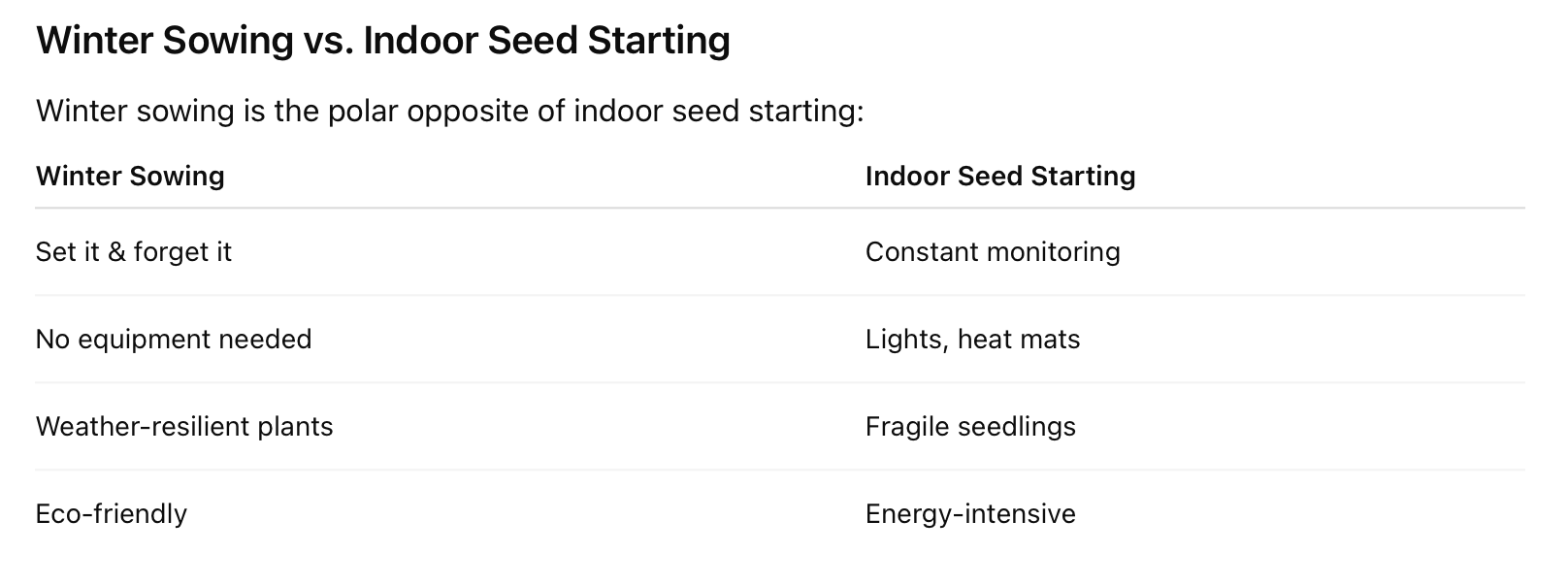
(I’ll be sharing a full post soon on indoor seed starting so you can decide what works best for your garden.)
Want to See My Exact Process?
🎥 I’m sharing my full winter sowing setup and step-by-step process on YouTube later this week.
Subscribe to our YouTube channel now so you don’t miss it—and follow along as we turn recycled milk jugs into a thriving spring garden.
Winter sowing reminds us that gardening doesn’t have to be complicated to be successful. Sometimes, the best thing we can do is step back, trust nature, and let the seeds lead the way. 🌱